
Monika Zsuzsanna Horváth Hungary – NAK
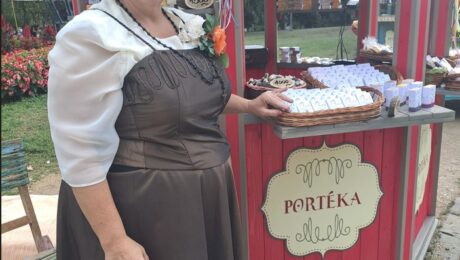
Monika Zsuzsanna Horváth, born in Oradea in 1971, has led a life defined by resilience, adaptability, and a strong sense of community. After moving to Hungary through marriage, she raised three sons, supported by her second husband, a livestock engineer. With a background in chemical technology and professional experience in the catering industry, Monika decided to redirect her life towards farming and rural development. Together with her husband, she settled in the small village of Szentistvánbaksa, where they began rearing goats. Initially, their focus lay on cheese production, yet Monika soon drew inspiration from her grandmother’s Transylvanian soap-making tradition. Using her own knowledge of chemistry, she transformed this heritage into a modern enterprise. Thus, in 2017, “Gidatitok” was born – a line of high-quality artisan goat milk soaps. What started under a public employment programme grew into a private enterprise, supported by a Budapest family business, and it quickly became a symbol of renewal for the village and its people.
Monika’s farm and manufactory have adopted an innovative approach that links animal husbandry, resource management, and sustainable product development. A key aspect of her model is the replacement of water with goat milk as the primary raw material in soap production. This method not only preserves water but also elevates the value of the final product. By contrast, cheese-making demands extensive water use at multiple stages, making soap a more resource-efficient alternative. Her commitment to sustainability extends further: goats are fed using local green waste from households and municipal services, reducing landfill pressure and improving soil quality through natural fertilisation. The cycle remains firmly rooted in the local ecosystem, as hay harvested from riverside meadows along the Hernád River provides fodder while helping maintain flood defences.
In production, water is used only sparingly for equipment cleaning, with careful measures in place to prevent unnecessary waste. The environmentally conscious ethos also shapes the broader farm activities, which integrate grazing, waste reduction, and natural soil enrichment. These decisions demonstrate Monika’s dedication to protecting local water resources, fostering biodiversity, and minimising ecological impact.
The results of this innovation are manifold and extend beyond environmental benefits. Economically, the enterprise contributes to the local tax base, supports municipal functions, and has invigorated tourism by linking soap-making with the Hernád River’s recreational opportunities. Property values in the village have risen, and new investments have been encouraged. Socially, the initiative is transformative: in a village of just 264 residents, Gidatitok now employs six individuals, offering meaningful work, stability, and renewed confidence to those involved. Many employees have overcome personal difficulties, rebuilt family ties, and regain a sense of purpose through their engagement with the manufactory. The project, once a modest local experiment, has grown into a recognised county treasure, listed in the County Value Registry and celebrated in national media.
Gidatitok exemplifies how a rural community can thrive when local traditions are combined with innovative, sustainable practices. It represents an approach that is both replicable and transferable, inspiring other villages to harness their unique resources. For Monika, the venture embodies more than business success: it is a testament to how collective will, respect for tradition, and a vision for sustainability can bring life back to even the smallest communities.
- Published in 2025 Edition
Sarah Descamps Belgium – Boerenbond
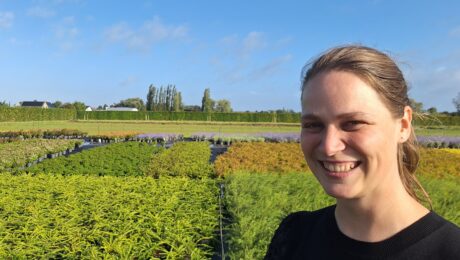
Sarah Descamps, mother of two sons, Léon and Félien, has recently taken over the management of D&V Plant Production, a family-owned nursery specialising in shrubs, herbs, and small fruit plants for garden centres. With a degree in Economics and an early professional experience in another company, Sarah chose to return to her roots by joining her parents’ business. She values the seasonal variety inherent in horticulture and enjoys the combination of administrative responsibilities with the more practical, hands-on elements of her work. This balance of roles provides her with both professional fulfilment and a deeper connection to the rhythm of the natural environment.
Under Sarah’s leadership, the nursery has embraced forward-looking strategies to address one of the most pressing challenges of modern horticulture: water management. Recognising the risks posed by climate change and the increasing scarcity of water, she and her family have undertaken significant investments in technological and infrastructural solutions. Central to this approach is the introduction of a horticultural computer system capable of monitoring and analysing water use in detail. This digital tool enables the nursery to operate with precision, ensuring that every litre of water is used efficiently and sustainably.
A cornerstone of their innovation is the installation of two foliage wells, each with a storage capacity of ten million litres. These exceed legislative requirements and ensure that the nursery is well-prepared for prolonged dry periods. With a total storage capacity of 24 million litres, the business is no longer dependent on external deliveries or vulnerable to drought conditions. Instead, rainwater is carefully collected and reused, creating a closed-loop system. Each summer night, approximately 250,000 litres are used for irrigation, with half of this amount recovered and reintegrated into the cycle. The long-term security provided by this infrastructure not only stabilises production but also demonstrates a practical response to environmental concerns.
The farm’s commitment to sustainability extends beyond water management. Solar panels and battery storage systems power the water pumps, ensuring energy efficiency and reducing reliance on conventional energy sources. Biodiversity is actively promoted within the nursery grounds through the installation of insect hotels and birdhouses, while beneficial insects are used for natural pest control. Together, these practices reflect a philosophy that integrates productivity with ecological responsibility.
The outcomes of Sarah’s innovation are significant on multiple levels. Environmentally, the nursery now operates with reduced pressure on surface and groundwater resources, contributing to the conservation of natural ecosystems. Economically, the stability of water supply secures long-term viability for the business, protecting it from climatic risks and enabling consistent production. Socially, the farm has become a source of inspiration and learning, hosting visits from fellow growers and partners who come to see the integrated water system and digital monitoring tools in action. By sharing knowledge and best practices, Sarah extends the benefits of her approach beyond her own enterprise, helping to guide the wider horticultural community towards more sustainable methods.
Through her vision, Sarah Descamps has transformed her family nursery into a model of resilience and ecological innovation. By uniting tradition with modern technology, she demonstrates how family-run horticultural businesses can thrive in the face of environmental challenges, setting an example that others can follow across the sector.
- Published in 2025 Edition
- 1
- 2

