
🏆Re-live the ceremony awards
This award is more than a celebration, it’s a reminder of the transformative power of women in agriculture. In this after movie, re-live the ceremony awards, that celebrated 5 women farmers making waves in sustainable water systems at the 8th Innovation Award for Women Farmers, hosted by COPA COGECA Women’s Committee with the support of Corteva !
- Published in 2025 Edition
Cheryl Poole Ireland – ICOS
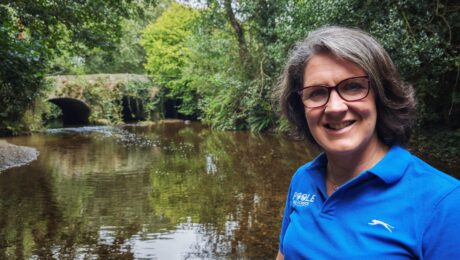
Cheryl Poole, Ph.D., is a dairy farmer based near Gorey in County Wexford, Ireland, where she lives with her husband Alan and their three children. The Poole family farm, spanning 103 acres, has been in the family since the early 1700s, making Cheryl and Alan the thirteenth generation to steward the land. Their enterprise centres on a 72-cow high-EBI dairy herd, with a focus on milk solids, herd health, and environmental sustainability. Cheryl’s scientific background, holding a BSc from NUI Galway and a doctorate in Chemistry, underpins her evidence-based approach to farming. Her doctoral research examined the mechanism of action of an anti-cancer drug, equipping her with skills in critical analysis and problem solving that she now applies to agriculture.
Although farming was not always her expected path, family circumstances brought Cheryl and Alan back to the land, where they resolved to demonstrate that an intensive, conventional dairy farm could achieve sustainability across economic, environmental, and social pillars. This conviction was also shaped by personal experience: their eldest son Jacob, who has a severe disability, finds joy and therapy in the River Bann, which runs through their land. Protecting this waterway became both a personal and professional mission.
The farm structure reflects a balance between productive dairy farming and ecological stewardship. More than 20% of the land is dedicated to biodiversity, including wildlife corridors, orchards, and hedgerows. Careful nutrient management ensures high nitrogen efficiency, while slurry storage and roofing minimise waste and water contamination. Rainwater harvesting is used for tasks such as cleaning the parlour, reducing reliance on mains water. The Pooles also engage in national programmes, such as the All-Ireland Pollinator Plan, bat and moth surveys, and regular biodiversity monitoring. Recently, their stretch of the River Bann achieved “Blue Dot” status, recognising it as a high-quality waterbody.
Water-focused innovations form the cornerstone of the Pooles’ sustainability model. These include a rainfall garden, sediment tanks, and a constructed wetland to filter and slow water flow before it enters the river. They have also diverted road drainage away from the river, channelling it through filtration systems on their land. These measures improve water quality, protect aquatic ecosystems, and demonstrate collaboration between farmers, government bodies, and local schools. Their projects not only benefit the farm but also contribute to wider community resilience, with local students using the wetland as a learning site for climate action.
The results of these innovations are far-reaching. Environmentally, nutrient run-off has been reduced, biodiversity has flourished, and the river has been safeguarded. Economically, fertiliser and energy costs have declined, while milk solids and herd performance have been maintained. Socially, Cheryl and Alan’s work fosters community engagement, through school partnerships, public talks, and farm walks. Their farm has attracted national and international recognition, from European Commission officials to researchers from Zambia and Armenia.
Cheryl Poole’s project demonstrates that sustainability in farming can be achieved without sacrificing productivity. By combining her scientific background, personal values, and dedication to her community, she has transformed her family farm into a model of water stewardship and environmental leadership. Her story illustrates how modern innovation, rooted in tradition and care for the land, can secure the future of both farming families and rural communities.
- Published in 2025 Edition
Alessandra Pighin italy – Coldiretti
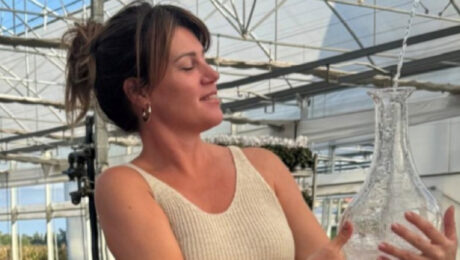
Alessandra Pighin is a horticultural entrepreneur from Rivignano Teor (Friuli Venezia Giulia), where she works with her husband in their family nursery, Floricoltura Odorico. With roots in farming since childhood, she has helped steer the company towards a model that blends tradition, environmental protection, and innovation. Located in a highly regulated riparian area along the Stella River, the nursery specialises in ornamental plants and species suited to this delicate ecosystem. Alessandra has championed water-efficient cultivation, biodiversity conservation, and reduced-impact production methods. A central achievement is the creation of a large-scale rainwater recovery and recycling system, enabling the company to collect and reuse up to 40,000 m³ of rainwater per year, significantly reducing groundwater use and strengthening resilience against drought. Her commitment to sustainability extends to biological control, inspired early in her career by observing how chemicals affected plant moisture. She now promotes more natural plant protection methods and engages in active knowledge-sharing with schools, local communities, and the University of Udine. In recent years, the business has faced significant challenges, including severe flooding in July 2023 that damaged structures and interrupted operations. Nevertheless, Alessandra views the event as a moment of shared resilience, reinforcing the team’s commitment to rebuilding and further strengthening their sustainable practices. The ongoing recovery underscores the importance of their water-focused innovation and the deep connection between the company, its landscape, and the community it serves
Alessandra’s work shows how a family-run nursery can thrive while protecting a fragile environment, turning innovation and responsibility into long-term resilience.
- Published in 2025 Edition
Lidia Moroń Morawska Poland – KRIR
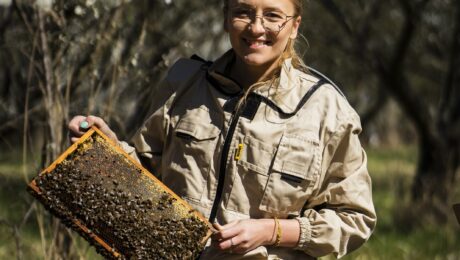
Lidia Moroń Morawska’s journey into agriculture and beekeeping reflects both a strong family tradition and a deeply personal transformation. Raised within a family that valued farming, she was particularly influenced by her mother, who managed an organic farm, and later by her husband, who ran a conventional apiary of 150 hives. Since 2011, Lidia has been co-managing the apiary with her husband, gaining both technical expertise and a profound understanding of the natural world. However, it was a significant period of health challenges that prompted her to reconsider her professional path. This experience inspired her to pursue a life more closely connected to nature, regeneration, and meaningful work. Motivated by these values, she established her own organic apiary, rooted in ecological principles and a personal commitment to sustainability.
The structure of Lidia’s farm is built upon organic beekeeping practices that prioritise environmental harmony and biodiversity. Unlike conventional methods, her apiary is guided by ecological integrity, ensuring that every stage of production respects natural cycles. The farm focuses on maintaining bee health through natural management techniques, avoiding synthetic treatments, and creating conditions that support strong colonies. Central to her approach is the promotion of diverse forage landscapes, achieved by integrating the apiary into organically managed farmland and surrounding ecosystems. This ensures that bees not only thrive but also contribute to local biodiversity. By cultivating honey and other bee products within these ecological frameworks, she has developed a farming model that is both sustainable and commercially viable.
Lidia’s innovation lies in her transition from conventional beekeeping methods to a fully organic and ecologically aligned system. This shift required extensive learning, adaptation, and investment in environmentally friendly techniques. She has embraced methods that strengthen the natural resilience of bee colonies, thereby reducing dependency on artificial inputs. In addition, her practices enhance pollination services, which in turn benefit the wider agricultural landscape. This holistic approach demonstrates how beekeeping can be both economically productive and ecologically restorative.
The outcomes of her innovation have been significant. By creating an organic apiary that functions as a model of ecological farming, Lidia has demonstrated the value of aligning agricultural production with natural systems. Her bees produce high-quality organic honey and other hive products, which reflect not only a commercial success but also a testament to the health of the environment in which they are produced. Furthermore, her work has had a broader impact on awareness within her community, showcasing the benefits of organic beekeeping and inspiring others to consider sustainable practices. The farm has contributed to biodiversity by encouraging the growth of wild plants and improving pollination for surrounding crops, thereby reinforcing the interdependence between farming and ecological health.
Through her resilience, innovation, and dedication, Lidia Moroń Morawska has created a farm that balances productivity with environmental stewardship. Her story illustrates how personal challenges can be transformed into opportunities for renewal, and how agriculture, when guided by ecological values, can become a source of both livelihood and regeneration.
- Published in 2025 Edition
- 1
- 2

